


Greetings from the Forge!
Today we’re talking book anatomy: front and back matter. How often do you think about the acknowledgement or the copyright pages? Yeah, that’s what we thought. Come with us as we walk you through which elements you need to include, what’s optional, and what you might never have considered including until now.
Also, did you know that Fablesmithy offers interior formatting services? If you have maps, art, or other tricky design elements, we’ll get those ironed out for you too.
A book’s front and back matter seldom attract the attention of readers, but does that mean that mean authors should skip including them? What’s considered too little, and what constitutes too much?
Let’s break down what all constitutes “front” and “back” matter, for that matter (I swear, that word is going to lose all meaning by the end of this article). These are the pages you find before and after the body of your manuscript, and they often include:
Front Matter
Praise, accolades, reviews
Half-title page
Title page
Copyright page
Also by the author...
Dedication
Preface
Maps & artwork
Chronologies
Character references, family trees, etc.
Table of Contents
Epigraph (i.e., thematic quote)
Back matter
Author’s note
Call to action
Acknowledgments
Appendices
Endnotes
Glossary
Bibliography of references
About the author
Also by the author...
Promotion of your next book
Bonus materials (e.g., a sample chapter)
Connect via socials / newsletter
Of course, very few books contain all of these. It’s up to you to decide which elements to include and which are unnecessary for your readership. Some authors consider a lot of this unnecessary fluff that delays a reader from getting into the story, while other authors ask, “If I want to make my novel indistinguishable from traditionally published books, how much front/back matter do I need?”
Most readers would be hard-pressed to name who the “Big 5” publishers are, but they will be quick to notice if a book’s interior doesn’t resemble what they’ve come to expect. Ultimately, a careful selection of front and back matter exude a sense of professionalism. Too little of it, and the book’s interior will feel amateurish; too much, and it may feel overly salesy or self-indulgent.
Now, let’s take a look at what the bare minimum, a healthy balance, and what going above-and-beyond would all include.
The Absolute Bare Minimum
If you’re a minimalist who wants to get away with the leanest amount of front and back matter, what’s the bare minimum you should include? Arguably:
Front:
Title page
Copyright page
Table of contents (for ebooks & non-fiction)
Back:
About the author
With these 3-4 elements, your interior will feel light, but it will hit all the requisites readers have come to expect.
The Healthy Balance
This balanced approach incorporates a sense of professionalism and a touch of gentle marketing. If a reader loves your work, you should take the opportunity to list out your other titles and to ask for a review.
Front:
Half-title
Title page
Copyright page
Also by the author... (if applicable; can also be placed in the back matter)
Table of contents (for ebooks & non-fiction)
Dedication and/or epigraph
Back:
Call to action (CTA)*
Acknowledgements
About the author
*For indie authors, a CTA page is a fantastic way to get more reviews. It’s best to ask your reader to review immediately after they finish your book (as in the very next page!), because as time passes, your reader will become less likely to do so. Strike while the iron’s hot, they say! (I’m sorry, but we have a forge theme at Fablesmithy, and I’m obligated to lean into it.)
By using a CTA page, you also have an opportunity to make reviewing your book as frictionless as possible. Many indie authors include a QR code for print or a link for ebooks to Goodreads or other review websites in their CTA page. The good news is Fablesmithy will make this for you as part of our interior formatting service (all you have to do is ask us for a CTA page).
More and more, readers are looking to connect to tight-knit communities around their favorite authors and books. CTA pages are great for leading readers to these communities by asking them to connect to you via your newsletter and/or social media channels.
Going Above and Beyond
If your book is heavy in worldbuilding (here’s looking at you, SFF writers), front and back matter is a great way to immerse your readers — especially if you’re writing a series. Language guides, character lists, artwork, and maps all set the tone and texture of your world before a reader plunges into the story. They’ll help your reader remember the people and places critical to your sprawling world. Also, they’re just plain fun.
To inspire you, here are some various front and back matter elements to consider using. You may overwhelm your reader by doing them all, so focus on what your reader needs to know to understand your world:
Maps / planetary systems
History chronologies
Character lists
Family trees / royal houses
Pantheons
Terminology
Slang / language / rune guides
Artwork
Lost or forbidden texts
Ballads / poems
If you’re ever unsure of how much front/back matter to include, you can always reach out to us at Fablesmithy. We can also ensure that all of your beautiful maps and artwork display correctly no matter which form factor your book comes in.
Hope this guide helps! Let us know if you think there’s something indie authors should be including in their books that’s not listed here. We love to hear from you.
» Client Spotlight
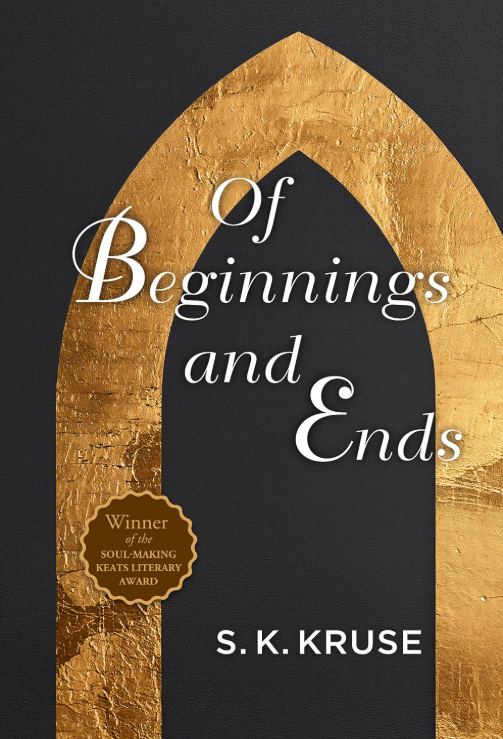
Of Beginnings and Ends
by S.K. Kruse
In every ending, waits a new beginning.
A woman is summoned again and again to a vast and luminous hall where she must choose between a mist-shrouded arch and a side door—the crucible of transformation or the slow decay of refusing to change.
Want your book featured?
At Fablesmithy, we want to show off our clients' books to the world. Let us know when your book is releasing, going on sale, won an award, going up on Kickstarter, or something else! To get your book featured, just fill out our form (open only to past and current clients of Fablesmithy).

Let Us Worry About the Margins
If you find interior formatting overwhelming, let Fablesmithy figure out what the margins and bleed should be. Standard interior formatting is currently $99.
See you at the forge!
– Autumn, Forgemaster of Design

Explore the Forges
At Fablesmithy, every Forge offers individual services so you can customize for what you need. Alternatively, you'll receive a discount when you bundle our services together. Visit Packages to see how much you can save.


